
Residential Interior Design Services in Auburndale, Miami: A Colorful Home That Adapts to Family Life

Updated: Sep 11
A family home becomes more generous when its rooms can change pace without constant rearranging. Breakfast may need a clear table and reachable dishes; later, the same household needs a reading seat, a surface for schoolwork, and somewhere to leave unfinished activities. Residential interior design services in Auburndale, Miami, should begin with those transitions. The useful measure of improvement is whether ordinary days become easier while the home gains a more personal, considered appearance.
This design concept pairs a coral sofa and teal lounge seating with ivory backgrounds, pale wood storage, and a softly shaped dining table. The four visualizations illustrate proposed furniture and material relationships rather than a completed residence. Auburndale is identified in the City of Miami's neighborhood mapping, but the address alone tells us nothing about a home's room sizes, building condition, or occupants. The following approach can help an owner and Endless Life Design develop a property-specific brief with clear priorities before products are selected.
In this guide
Plan the moments when family activities overlap
Describe the busiest half hour in the home, then describe the quietest. Perhaps someone prepares dinner while another person works at the dining table and a third wants to read. Record where those activities actually happen, including the places people avoid. A room called the family room may not be the family's preferred gathering space. That difference is useful information. It suggests the design should follow daylight, convenience, and comfort rather than preserve an arrangement that has never worked particularly well.
Turn those observations into a short list of conflicts. For example, homework occupies the only serving surface, a bag blocks a cabinet door, or the most comfortable chair sits in the main walking route. Rank the conflicts by frequency and consequence. Solving one daily obstruction usually contributes more than adding several decorative objects. Also ask what already works and should remain: a view from the sofa, a familiar dining chair, or a favorite reading corner. A stronger plan improves daily life without assuming that a fresh start requires replacing everything.
Draw an ordinary layout before the party layout
Begin with the room's normal arrangement, including actual furniture depths and the positions of doors, drawers, and windows. Draw the route between entry, seating, dining, and the rooms beyond. A visually open floor plan can still have awkward movement if people repeatedly cut through the conversation group. Use paper outlines or removable floor markers to test a prospective sofa and table. These are planning aids, not substitutes for measured drawings, but they let the household experience scale before committing to a large purchase.
Next test a larger gathering. Identify where an occasional chair can join the group and where a drink can be placed from every seat. Avoid a flexible arrangement that depends on moving a heavy cabinet or carrying furniture between floors. An example might use two lightweight stools that normally sit beside a wall and move toward the coffee table when guests arrive. Whether that works depends on the actual room and residents. The right alternative should be simple enough to use on a busy evening, with a clear place for every displaced object afterward.
Give coral and teal unequal jobs
Color feels more coherent when each shade has a purpose. In this concept, coral creates a warm focal point on the principal sofa; teal gives the lounge chair greater visual depth. Ivory walls, a pale rug, and light wood make space around both. The scheme does not require matching every cushion or accessory. A small ceramic object can echo one color loosely, while artwork introduces another tone that belongs to the owner. That variation gives the room personality without turning the palette into a repeated formula.
Assess color by area as well as shade. A tiny teal swatch can look lively, while a full wall of the same color may feel much darker. Wrap an upholstery sample over a curved form and place a large painted board beside the existing flooring. Look from the doorway and from the sofa, during daylight and after lamps are on. If the balance feels too active, reduce the size of one saturated element before abandoning the entire idea. Restraint often comes from proportion rather than replacing every interesting choice with beige.
Choose a sofa around the people who sit on it
The sofa has to accommodate the household's actual habits. Some people prefer an upright seat for conversation; others curl up, lie down, or use a separate footrest. Compare those preferences openly before specifying cushion depth and back height. Use an existing comfortable chair as a reference, while recognizing that a sofa's arm and cushion construction change the experience. Request a sitting trial, sample cushion, or relevant maker's prototype where available. An attractive rendering cannot establish how supported a particular person will feel after an hour.
For custom seating, ask how the frame, cushions, covers, and legs can be maintained or replaced. Consider whether several smaller cushions are practical for the household or create a daily straightening chore. A broad arm might be pleasant to lean against but consume space needed for seating. Removable covers can be useful only if removal, cleaning, and refitting are genuinely manageable for that particular product. Put comfort preferences and maintenance expectations into the specification alongside color. This creates an approval process based on use, rather than a silhouette that happens to photograph well.

Compare fabric construction before judging performance
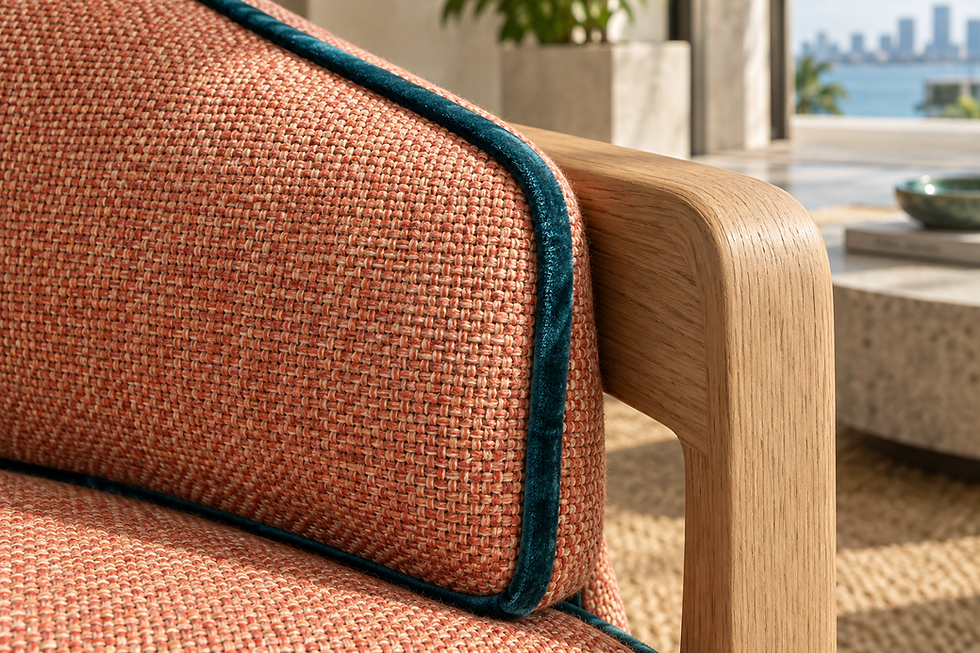
The coral upholstery shown here has a visible woven structure, while the teal chair uses a plush surface with directional character. Those differences matter to touch and appearance. Look at yarn size, openness of the weave, seam behavior, and the way the material curves around an arm. A textured fabric may feel appealing against a hand but uncomfortable against bare skin for one resident. Another may prefer that same texture. Collect those responses without assuming a universal hierarchy between smooth, crisp, soft, or heavily textured cloth.
Ask the supplier for the exact fabric's intended use and care instructions. A broad performance label does not explain every spill, cleaning product, or wear pattern. For a home with pets or children, discuss actual activities and likely contact instead of treating the label as a guarantee. Keep a sample of the approved fabric with its product reference and dye-lot information when supplied. If spare material is practical, determine where it will be stored. Planning a future repair while the original specification is available is easier than trying to identify an unmarked fabric years later.
Make the dining table serve daily life gracefully
The proposed oval oak table creates a softer outline beside the living room's stronger colors. Its shape still needs to be tested against the room and the chairs. Review how people approach their seats, where the table base lands, and whether the edge feels comfortable against forearms. A pedestal can reduce the number of legs around the perimeter, but its footprint may still interfere with feet. Compare the actual chair and table together whenever possible; independent showroom approval can miss an awkward relationship between seat, apron, and armrest.
Plan the everyday place settings before the largest holiday meal. If the table also hosts drawing, paperwork, or games, give those activities a nearby storage destination so meals can start without a prolonged clearing operation. For an extending table, record both sizes on the plan and identify a safe location for leaves and extra chairs. This makes versatility concrete. A generous dining room is not simply the one with the largest table; it is the one that offers comfortable seating, usable serving space, and an easy transition between the household's different routines.
Design storage from objects outward
Start a storage schedule with the objects that currently lack a home. Measure board games, chargers, school materials, serving dishes, and the awkward item that never fits anywhere. Group them by how often they are used and who needs access. Frequently handled items should not depend on moving a fragile display. The pale wood wall in this concept can combine enclosed family storage with one or two open areas for books and personal objects. Its value comes from that specific organization, not from the number of doors drawn across the elevation.
Make the interior as deliberate as the exterior. Decide where adjustable shelves help, which drawers need removable dividers, and how cables reach a charging area without preventing a door from closing. Allow service access for any equipment and confirm its ventilation needs with the relevant manufacturer. Reserve a modest amount of unassigned space for changing routines. Filling every compartment on the first day often recreates the original clutter problem inside an expensive cabinet. Review the proposed contents with the household before fabrication so the person using the storage can understand the logic immediately.
Test the daily reset before adding accessories
A useful family room needs an easy way to return from activity to rest. Walk through a realistic evening reset on the proposed plan: where does the unfinished puzzle go, where are the charging cables, and what happens to the decorative cushions when someone wants to stretch out? Assign those objects destinations that do not block another task. A tray may gather small items, but it is only helpful if there is a suitable place to set the tray. Treat these modest movements as part of the design rather than as housekeeping problems to solve afterward.
Choose accessories only after the main activities have space. A coffee table can hold one meaningful object and still offer a usable surface; it need not carry a permanent arrangement across its entire top. In the dining area, allow room for a serving dish without requiring the removal of several fragile pieces. Review the plan with whoever usually tidies the rooms, since that person will often recognize an impractical suggestion immediately. The objective is a home that looks considered while occupied, with a reset routine that fits the household’s energy and habits instead of depending on a carefully staged photograph.
Material and planning reference: Natural Stone Institute: Care and cleaning.

Specify wood grain, construction, and repair together
Pale oak can provide a quiet background to coral and teal, while a darker frame introduces contrast on a special chair. The exact species, cut, finish, and construction should be named in the furniture specification. A marketing description such as natural wood does not tell the owner whether a panel is solid timber, veneer, or another construction. Each can have a useful role when properly designed. Review grain direction on a full cabinet elevation, particularly where a long horizontal run meets a tall door or a returning side panel.
The USDA Wood Handbook explains that wood exchanges moisture with the surrounding air. Ask the maker how handling, installation, and construction account for the selected material's behavior, rather than relying on a promise that a finish prevents all movement. Examine an approved finish sample for sheen and touch, including the edges that receive frequent contact. Discuss repair access and what a realistic future touch-up would involve. Grain matching deserves attention, but a family cabinet also needs doors that operate well and hardware that can be adjusted after years of everyday use.
Assign stone according to exposure and care tolerance
A light stone coffee table can make the seating area feel composed, but it will encounter drinks, toys, books, and moving objects. Before selecting a slab, ask whether visible changes in the surface would feel like welcome character or disappointing damage. The Natural Stone Institute notes that acidic substances can etch calcareous stones. A marble table used for citrus drinks therefore raises a different maintenance conversation from a decorative shelf that rarely meets liquids. The design should acknowledge those ordinary circumstances before the owner chooses a material based only on a photograph.
Sealing is not a universal solution, and an impregnating treatment does not make every stone stain-proof. Confirm the identity of the actual material and its supplier's guidance, then review edge shape, support, weight, and repair options with the fabricator. If quartzite is proposed, distinguish natural quartzite from manufactured quartz surfacing; the names do not describe the same product. Keep the final slab selection and cut drawing together. Where the room already includes vivid upholstery and visible wood grain, a quieter stone pattern may create a more satisfying balance than another competing focal point.
Plan curtains around opening, closing, and cleaning
Window treatments should respond to the household's privacy and daylight needs at each opening. A garden-facing window may call for a different arrangement from one near a neighboring home. Test a sheer fabric during the day and after dark; the daytime appearance alone cannot establish nighttime privacy. If a lined layer is needed, determine where it stacks when open and whether nearby seating leaves enough room to operate it. Include tracks, headings, returns, and hardware in the design discussion so the finished treatment looks intentional from the side as well as the front.
Consider the full movement of doors and windows, handles, and any existing equipment near the opening. A curtain that looks generous when closed may become awkward when gathered against a cabinet. Ask how the selected fabric should be cleaned and how panels will be removed and rehung. A long sweeping hem may appeal visually yet conflict with the family's preferred maintenance routine. The best solution balances the softness shown in the concept with practical access. Approve a real hanging sample or a sufficiently large fabric length whenever the textile's transparency, weight, or fall is uncertain.
Give evening activities their own light
Imagine the living room after dinner with three activities underway: reading, conversation, and finding an item in storage. One overhead fixture may be unable to serve all three comfortably. Plan light at the points where people need it, using suitable lamps or fixtures and controls that the residents can understand. A reading source should be evaluated from the actual seat, including reflections on a page or screen. Accent light can reveal the wood or a favorite object, but it should not become glare in another person's normal line of sight.
Compare the proposed lamps with the coral and teal samples after daylight fades. The color relationships may change, and a fabric that looked balanced in a showroom may feel too strong under the chosen source. Review dimming compatibility and any new electrical requirements with the appropriate qualified professional before ordering. Keep at least one straightforward way to create the room's ordinary evening setting. Elaborate controls add little if daily use requires guessing which switch affects which fixture. A comfortable result provides choice while making the default experience simple for residents and visitors alike.
Create a quieter room within the family palette
A study corner or bedroom can relate to the living room without repeating its intensity. Use the same pale wood and warm ivory, then introduce coral or teal in a smaller textile or object. This maintains continuity while allowing different rooms to have different levels of activity. Identify the sources of irritation first: a bright lamp reflected in a screen, visible piles beside a bed, or seating too near a busy passage. Reducing those conflicts often produces more relief than adding another decorative layer intended to make the space feel restful.
Discuss touch, sound, light, and fragrance with the people using the room. A plush rug may be welcome to one resident while another prefers a smoother surface that is easier to maintain. Soft furnishings can change the impression of a reflective room, but decorative selections should not be represented as a technical sound-isolation system. Added scent is optional; an unscented environment may be the household's preference. Follow product-specific guidance for finishes and their care. Sensory comfort comes from making informed choices available to the residents rather than prescribing one supposedly ideal atmosphere.
Spend first on the decisions that affect everything else
Separate the budget into layout and planning, retained-piece improvements, major furniture, custom work, lighting, textiles, delivery, and installation. The categories do not imply a fixed fee or a required purchasing package; they help the owner see where the proposed scope puts resources. Prioritize items with the greatest effect on daily use. A well-sized sofa and effective storage may deserve more attention than a decorative occasional table. A clear comparison also makes it easier to decide where a standard product works and where customization solves a measurable problem.
Sequence purchases around dependencies. Cabinet dimensions may influence outlets and curtain stacking; the final table size determines how many chairs genuinely fit. Record those relationships before ordering a tempting item with limited availability. Request an agreed written scope from Endless Life Design that distinguishes space planning, 3D design, product sourcing, and procurement planning as applicable to the project. Confirm what other professional or installation work is required separately. This keeps the design ambition connected to a usable delivery plan, with responsibilities understood before several interdependent products are in motion.
Approve a coordinated sample set and ordering checklist
Gather wall color, main fabrics, wood finish, metal finish, rug, and any stone into one physical review. Compare them in the room rather than judging each from a different screen. Move the samples between the window and the seating area, then look again after dark. Keep one signed or otherwise clearly approved reference set with dated specifications. When a supplier proposes a substitution, compare it with the whole set; a seemingly minor change in sheen or undertone can disturb a relationship that was carefully resolved across several materials.
Before an order is released, check the current drawing revision, dimensions, finish, fabric orientation, quantities, delivery route, assembly requirements, and designated installation location. Confirm who receives the goods, who checks damage or discrepancies, and how concerns will be reported under the supplier's terms. These are project-specific responsibilities to agree, not assumptions created by a mood board. For a custom item, retain the approved shop drawing and note any details awaiting confirmation. A concise checklist helps protect the thought invested in the design when the project moves from appealing images to physical furniture.
At installation, use the approved checklist to review the room in motion. Open every drawer, pull out the dining chairs, operate the curtains, and sit where the reading lamp is meant to work. Check whether the family can reach frequently used storage without rearranging the display. Separate product defects or delivery discrepancies from design adjustments that become apparent only in daily use, and record who will address each item. Keep the final specifications, care instructions, and supplier contacts together. A photograph is a useful record of the finished arrangement, but a simple document identifying the exact materials makes later maintenance and replacement much more manageable. This practical handover lets the household enjoy the richer color and texture with a clear understanding of how the rooms are intended to function.
Auburndale questions before the first consultation
Can the new rooms include furniture we already own? They can when its dimensions, condition, and purpose support the plan. Photograph important pieces and explain why they matter before a replacement scheme develops. Reupholstery, relocation, or a different neighboring piece may give an existing item a useful new role. Should every room use coral and teal? No; the palette can concentrate in the living area while connected rooms repeat only a wood, neutral, or small accent. Coherence comes from considered relationships, not from using every color everywhere.
What should you bring to Endless Life Design? Start with the property address, available plans, room photographs, a list of retained pieces, and the daily conflicts you want resolved. Include comfort preferences, maintenance expectations, and a realistic scope and investment range for discussion. Ask how the design presentation will show furniture scale, material choices, and the decisions needed before ordering. Residential interior design in Auburndale can begin with an approachable goal: create rooms that welcome family activity, recover easily after it, and express the people who live there with confidence and warmth.
Residential interior design services near me, in Miami, Florida: hiring questions
Use this Auburndale brief when discussing custom residential interior design services in Miami, Florida with Endless Life Design.
Color can make a family home feel expressive without making every room equally intense. Decide where you want energy, where you want calm and which surfaces must connect the rooms before approving a vivid palette.
How do I choose the best residential interior designer near me in Miami, FL?
If your search began with “hire best custom residential interior designer near me in Miami, FL,” ask for a clear explanation of how color supports daily use. A designer should show where the strongest hues belong and how quieter adjoining spaces keep the overall home comfortable.
How should I compare top residential interior designers near me?
Give candidates the same photographs and a list of favorite objects. Compare how they translate your preferences into material relationships, furniture scale and a practical layout, rather than judging by a single dramatic image.
What should residential interior design services near me in Miami, FL include?
If you requested “custom residential interior design services near me in Miami, Florida,” identify the rooms, custom pieces and window treatments in the scope. Ask who coordinates paint and upholstery samples, records color approvals and checks dimensions before an order is placed.
What should I ask a luxury residential interior designer near me in Miami, FL?
Ask to see the vivid upholstery beside the proposed rug and wood finish at a useful scale. Review the fabric's texture, pattern direction and seam placement so a beautiful color also works on the actual furniture form.
How is custom residential interior design near me in Miami, FL developed?
Begin with one anchor material and test its companions together. A strong patterned chair may need a quieter sofa, while a richly colored wall can be balanced by pale drapery and warm wood.
What should high-end interior design services near me in Miami, FL deliver?
Expect documented color references, approved samples and a layout that can accommodate later household changes. A flexible side table or movable reading chair should have a planned home instead of becoming an afterthought.
Plan your Auburndale interior with Endless Life Design
Bring your floor plan, room photographs and priorities to a conversation about residential interior design and 3D planning. Confirm the rooms, deliverables, procurement responsibilities and fee in your written proposal before work begins.
Call (305) 680-3283 or contact Endless Life Design to discuss the next step for your home.
Continue exploring Miami home interiors
References and further reading
We are also a full-service interior design company and interior decoration company — offering interior design services, room design and home styling, with living room decor ideas, bedroom decor ideas, kitchen decorating and bathroom decor ideas for houses, condos and estates across Miami-Dade, Broward and Palm Beach.
People also find us searching: home decorator, home decorate, interiors, room decorating, inside design, interior design firms, interior company, shop interior design, interior design stores, interior design shop, interior design publications, ideas for wall decor, design interior design, interior design interior design, interior and design, d interior design, house designer near me, interior designer near by me, interior designers in near me, interior designs styles, interior design and styling, interior design styling, interior decoration store, design room design, home interior design, interior design near me, living room design, interior design companies near me, interior designer near me, interior decorator near me, house designers near me, living room decor ideas, bedroom decor ideas, home decor ideas, interior design services, house decor ideas, sitting room decor ideas, home interior ideas, living decor ideas, interior ideas for living room, bedroom interior ideas, bedroom decoration design, bathroom decor ideas, bedroom decoration, bed room decoration, small living room decorating ideas, small living room furniture ideas, room designer, room decor ideas, interior design company, interior company, interior decoration company, kitchen decorating, wall decor for living room, living room decor, kitchen decor ideas, home styling, master bathroom decor ideas, decorating a small bedroom, modern bathroom decor ideas, shop home decor, stores for home decor, and interior designers.


Comments