
Residential Interior Design Services Near Me in Miami, Florida: Homes for Art and Collected Objects

Updated: Sep 24
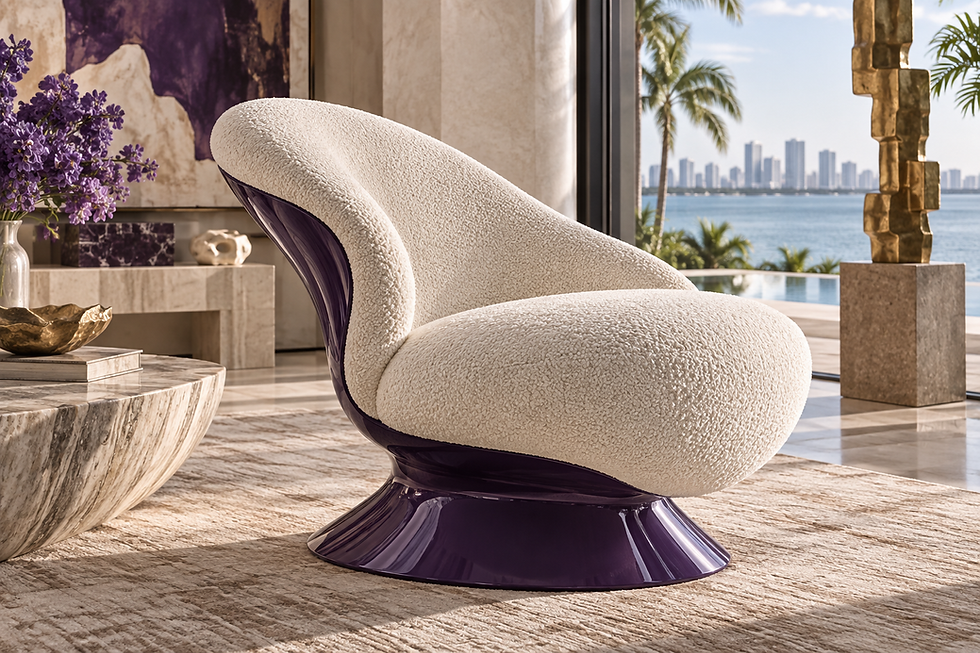
A home for art should allow the collection and everyday life to coexist comfortably. The rooms need places to sit, move and gather as well as carefully considered display positions. This guide to residential interior design services near me in Miami, Florida explores an art-focused residential concept with an ivory sofa, cobalt and vermilion artwork, violet lacquer and bronze. The illustrated works and furnishings are original imagined design elements.
Original design visualizations by Endless Life Design. These images illustrate imagined residential concepts; materials, dimensions and technical details are developed for each commissioned project.
Contents
Begin with the works that matter most
Identify the pieces that should shape the room. Record their dimensions, framing, display requirements and the way the owner wants to experience them. A large painting may organize an entire seating group, while a small sculpture may be best enjoyed at close range beside a chair.
Separate the collection's needs from a desire to fill walls. An empty area can give a significant work room to be understood. It can also preserve a place for a future acquisition. The room does not need to appear complete in the sense of having no available surface.
Ask the owner which pieces are viewed often and which could rotate. That distinction can guide a flexible display plan. A home collection is usually more personal and changeable than a fixed exhibition, so its interior should allow the relationship between objects and daily life to develop.

Keep furniture in conversation with the art
Furniture can relate to an artwork through color, shape or material without copying it literally. The concept's ivory sofa provides a quiet horizontal form beneath vivid color. A violet base or bronze object repeats selected notes at a smaller scale.
Avoid treating every artwork as an instruction to match the upholstery. Sometimes a contrasting but restrained furniture palette makes the collection more legible. Compare the room with the art present before approving a complete sample board.
Consider the seated view. A painting placed for the entrance may be partially hidden or difficult to appreciate from the principal chair. Walk through the room and sit in several positions. The most successful arrangement gives the collection a convincing presence while preserving the comfort and usefulness of the furniture.
Give sculpture space around its outline
A sculpture is experienced through its silhouette, surface and changing viewpoint. A pedestal should be considered with the work rather than selected as a generic support. Its height, color and footprint affect how the object is seen and how people move nearby.
The violet pedestal in the concept introduces a strong color note. In a real collection, the support should be designed for the particular work and coordinated with appropriate specialist guidance. Stability, handling and any display requirements belong in that discussion.
Review the sculpture from adjoining rooms and along ordinary routes. A position that looks ideal in one photograph may be inconvenient in daily life. Leave enough space for the work to be appreciated without turning a circulation area into a fragile obstacle course.
Coordinate light with the collection's needs
Art lighting should be developed around the actual works, their surfaces and any specialist care requirements. A glossy painting, a textured canvas and a metal sculpture can respond very differently. Ask the relevant professional to advise on sensitive or valuable pieces.
Test reflections from the normal viewing positions. A fixture that emphasizes texture may also create a distracting bright area. The room's windows and decorative lamps belong in the same review, because the work is experienced under the complete lighting environment.
Keep the room comfortable when the art is not the sole focus. A home still needs usable light for conversation, reading and movement. The best arrangement allows the collection to have presence while supporting the activities around it, with controls that make the transition between scenes straightforward.
Plan for the next acquisition
A growing collection benefits from an adaptable room. Leave selected walls or display positions capable of accepting a different scale of work. Keep information about installation methods, lighting and finishes so that a future change can be made thoughtfully.
Provide appropriate storage for the objects and accessories that are not always displayed. Packing materials, documentation and rotating pieces should not be forced into unsuitable leftover space. Coordinate the care of valuable items with the relevant specialists.
At completion, review the home as both a collection and a place to live. Sit, talk, read and move through the rooms. The art should enrich those experiences without making the household feel like visitors in its own home. That balance is the foundation of a personal residential gallery.

A room brief that turns preferences into decisions
Begin with a description of an ordinary day in this room. Record who arrives first, which activities happen together and what remains out after everyone leaves. A room that is photographed empty can conceal awkward daily compromises. A room brief gives the designer a way to evaluate beauty alongside those routines. Include the objects you intend to keep, the furniture you dislike using and the small inconveniences that have become familiar.
Separate essential outcomes from attractive possibilities. An essential outcome might be seating that allows an older relative to stand comfortably, a place to spread out work or a clear view of the garden from a favorite chair. A possibility might be a decorative screen, unusual stone or a second lamp. This distinction helps protect the purpose of the project when selections change. Give each request a reason so that another solution can achieve the same result.
Photograph the room from every doorway, then photograph the existing furniture in use. Bring approximate dimensions for discussion, while leaving final ordering measurements to the project team. Note which doors open toward the furniture and which objects need electrical connections. If the work includes cabinetry, record what must fit inside it. A shelf described as generous is less useful than a shelf designed around a particular collection.
Conclude the brief with three words for the experience you want and one sentence about maintenance. Welcoming, expressive and composed will suggest different choices from intimate, enveloping and theatrical. These words do not replace drawings or samples. They provide a consistent test when a beautiful item appears that may belong in another room. The completed brief should make the next design meeting more decisive, while leaving room for unexpected ideas.
Circulation, scale and furniture placement
A successful layout considers movement before decoration. Draw the route from each entrance to the room's main destinations, including storage, windows and adjoining spaces. Furniture can then form useful groups without turning every journey into an obstacle course. In a large room, several smaller destinations often feel more natural than one oversized arrangement. In a compact room, fewer pieces with clear purposes can offer a richer experience than a crowded collection.
Test the furniture footprint on the floor before approving an order. Include the space needed when a chair is occupied, a cabinet is open or a movable piece changes position. A furniture plan can look generous when it shows only closed drawers and pushed-in seats. A taped outline, cardboard profile or temporary arrangement reveals how the proposal behaves during use. Confirm any required clearances with the professionals responsible for the particular project.
Consider the view into the room as carefully as the view from the favorite seat. The back of a sofa or cabinet may become a principal surface when furniture floats away from the wall. Select finished backs, thoughtful seams and appropriate cable routes for those positions. A sculptural profile can improve an entrance view, but it should not obstruct another person's line of sight or make the furniture difficult to approach.
Use a full-size test whenever the room depends on a difficult proportion. Try the proposed table beside the actual chair, hold a lighting template against the wall and compare a sample rug outline with the furniture group. These modest exercises help the designer distinguish between an exciting drawing and a comfortable room. They also create a record of the decisions that should remain stable as finishes and decorative objects are refined.
A color palette with depth and restraint
Build the palette around a relationship rather than a list of fashionable colors. Choose a principal field, a supporting tone and a smaller note that introduces energy. The principal field may be pale plaster, dark wood or a substantial upholstered form. The supporting tone can repeat across several materials, while the accent appears in a lamp, piping, artwork or a single chair. Different proportions can make the same colors feel surprisingly different.
Consider the color of the room's fixed elements before selecting movable pieces. Floors, window frames, doors and existing stone will remain visible even in a richly furnished interior. Compare samples where those elements meet. A small difference in undertone can matter more than a large difference in darkness. Leave the samples in place for several days if possible so that decisions include both bright daylight and the light used at night.
Introduce variety through texture when the color range is narrow. A matte wall, lustrous textile, open-grained wood and subtly reflective metal can create depth without requiring another strong hue. Conversely, a vivid palette often benefits from quieter shapes and simpler surfaces. The goal is to decide where attention should land and where the eye can rest. Every surface does not need to compete for the same level of interest.
Review the palette from adjoining rooms as well as within the room itself. An opening frames a composition, and a glimpse of one color can make the next space feel connected. Repetition does not require exact matching. A dark blue thread in one fabric might relate to a broader blue surface elsewhere. This kind of continuity helps a home feel collected and personal while allowing each room to have a distinct mood.
Lighting the room in layers
Think of lighting as a sequence of experiences. First consider the light needed to move through the room comfortably. Then identify tasks such as reading, serving, selecting clothes or examining artwork. Finally, decide which surfaces and objects deserve emphasis. A decorative fixture can contribute to several of these purposes, but it rarely solves every one. Drawing the layers separately makes it easier to see what the room actually needs.
Review light from the position of the person using the space. A lamp that looks attractive from the doorway may create a distracting reflection from a chair. A ceiling fixture can cast an awkward shadow on a work surface or place a bright source directly in someone's view. Mock up important positions when possible. The relationship between the source, the object and the viewer matters more than the fixture's appearance in isolation.
Compare finishes beneath the actual proposed lamps, including at reduced output. Warm colors, pale stone and metallic surfaces can respond differently than expected. A sample board seen only in a showroom is incomplete evidence for an evening room. Ask the lighting supplier and electrical professional to confirm compatibility between fixtures, drivers, controls and dimmers. Document the exact selected products before the installation schedule is finalized.
Give the room a small number of understandable lighting scenes. Everyday use, focused activity and relaxed evening use are often better starting points than an elaborate set of rarely used settings. Place controls where people naturally enter and settle. Preserve access to components that may need attention later. When the arrangement is intuitive, lighting becomes part of the home's comfort instead of another system the owner must remember how to operate.
Approving custom furniture before fabrication
Custom furniture begins with a specific problem or opportunity. A curved wall may need a particular sofa profile, a collection may require unusual storage or a favorite seated posture may justify a different cushion arrangement. State that purpose before discussing decorative details. When the purpose is clear, the maker can help refine a design that earns its custom work through both function and character.
Request drawings that describe the complete piece, including dimensions, materials, visible seams, hardware and finish boundaries. An attractive perspective image is useful for discussing appearance, but it does not replace the information needed to build accurately. Ask which features are fixed and which can still be adjusted. Resolve important questions about comfort, access and delivery before approving the final drawing.
Use a prototype or sample detail where the project depends on an unfamiliar shape. A full-size seat test can reveal a problem that a scaled drawing hides. A sample corner can show how upholstery moves around a tight radius. A finish panel can demonstrate how a rounded edge will catch the light. These checks concentrate effort where the risk of disappointment is greatest.
Agree on a clear approval sequence and identify who accepts each stage. Keep dated drawings and samples so that the workshop and project team work from the same version. Confirm how the finished piece will enter the property, where it will wait and who will inspect it. Bespoke work is most rewarding when artistic freedom is supported by a careful record of decisions. That record protects the intended result while making later maintenance or additional pieces easier to coordinate.
Art, lamps and objects that make the room personal
Begin with the objects that already have meaning. A painting, a ceramic vessel, a family photograph or an unusual chair can provide a more convincing starting point than a fully matched accessory collection. Identify the pieces that deserve a principal position and those that are best enjoyed at close range. The room can then give each object an appropriate setting rather than treating everything as equal visual background.
Group objects by a relationship you can describe. Similar colors, contrasting surfaces or a shared theme can bring different shapes together. Leave enough space around important pieces for their outlines to remain legible. A broad shelf does not need to be filled from end to end. Empty areas help the arrangement feel deliberate and make future additions possible without rebuilding the entire display.
Check the viewing height and the light before committing to a location. A work that feels powerful while standing may be less satisfying from a low seat. A glossy surface can reflect a window or lamp and conceal its detail. For valuable or sensitive works, obtain suitable display and conservation guidance from the relevant specialist. Decorative placement should respect the object as well as the appearance of the room.
Choose lamps and everyday accessories with the same care as display pieces. A small table needs room for the objects people actually use, and a beautiful vessel should not block conversation or a useful view. Make one final pass through the room after installation to remove anything that merely fills a gap. The resulting collection should feel personal, usable and capable of changing as the household's interests develop.
Storage designed around the objects it holds
Inventory the things that belong in the room before drawing cabinets. Separate items used daily, occasionally and only for display. Measure the largest or most awkward pieces, including their handles, cases and cables. A cabinet that looks generous can still fail if one essential object does not fit. The inventory also reveals whether the household needs more storage or simply a clearer arrangement for what it already owns.
Match the storage method to the frequency of use. Frequently handled objects should be easy to reach and return. Display pieces can occupy more prominent but less convenient positions. Closed storage can calm a busy room, while selected open areas keep the cabinetry from feeling anonymous. Decide which doors and drawers are likely to be open at the same time and show those conditions on the plan.
Review interiors as carefully as exterior elevations. Shelves, dividers, lighting and hardware determine how useful the cabinet becomes. Ask for access to any equipment that requires adjustment or replacement. Where electronics, appliances or other specialized items are housed, follow the actual manufacturer's requirements and coordinate the assembly with the responsible installer. Concealment should not make routine service unnecessarily difficult.
Leave a reasonable capacity for change without turning every wall into cabinetry. A small number of adjustable zones may be more valuable than an elaborate fixed arrangement based on today's exact possessions. Keep a record of hardware and finish selections for future additions. Good storage supports the room's activities so quietly that the visible furniture, materials and personal objects can carry the character of the design.
A final review from morning to evening
Review the proposal as a complete room before approving the last purchases. Place the important samples together, look at the furniture plan and imagine the room at different times of day. Ask whether the principal activity is still clear and whether each new item contributes to it. This review can uncover a mismatch between individually attractive pieces before they become an expensive installation problem.
Consider what happens when the room is not perfectly styled. Where will a bag be put down, where will a book remain open and what will be visible when a cabinet is in use? A successful design accommodates those ordinary conditions without losing its coherence. The same question applies to entertaining: show the additional seats, serving objects and personal belongings that appear when the room is full.
Invite the people who use the space to test the decisions that affect them. One person may prefer a firmer cushion, another may need a brighter reading position and another may value an unobstructed route. These preferences can often be accommodated through a varied arrangement. They are easier to address during design than after every piece has been ordered.
Make the final review an action list with clear owners. Separate matters that must be resolved before fabrication from adjustments that can occur during installation. Record the approved version and remove obsolete alternatives from the active schedule. The goal is a room that feels coherent without becoming rigid: beautiful enough to be memorable, comfortable enough to use naturally and flexible enough to remain relevant as life changes.
Hiring residential interior design services in Miami
What should I compare before hiring a designer?
If your search is “hire best custom residential interior designer near me in Miami, FL,” compare how each team would address art placement, comfortable living and a collection that can evolve. Ask to see the proposed scope, examples relevant to your project and the decisions you will be asked to approve. A search for “best residential interior designer near me in Miami, FL” is a starting point; the useful comparison is the quality and clarity of the service offered for your own home.
Can this concept be adapted to my residence?
Homeowners seeking residential interior design services near me in Miami, FL should begin with the actual property, its dimensions and the way the household lives. The images illustrate a possible design direction. A proposal for custom residential interior design near me in Miami, FL should explain how that direction becomes a measured layout, suitable materials and coordinated details. It should also identify any specialist work required by the agreed scope.
What should luxury include beyond the image?
When comparing a luxury residential interior designer near me in Miami, FL, look for attention to comfort, proportions and the details you use every day. For this project, that means a clear approach to art placement, comfortable living and a collection that can evolve. A proposal for high-end interior design services near me in Miami, FL should make the selections, custom work, purchasing responsibilities and installation coordination understandable, with appropriate samples and approvals before commitments are made.
How can I evaluate different design proposals?
When reviewing results for “top residential interior designers near me,” compare equivalent deliverables rather than photographs alone. Ask which drawings, revisions, material reviews and site coordination are included. If you need residential interior design services near me in Miami, Florida, explain the rooms involved, what will remain and what should change. A useful proposal connects your goals to a defined sequence of work and identifies which decisions affect the schedule.
Can I commission custom furniture and finishes?
If you are seeking custom residential interior design services near me in Miami, Florida, discuss the pieces that would benefit from a made-to-fit approach. Custom work should solve a real functional or visual need. A scope for custom residential interior design services in Miami, Florida can then identify the required drawings, samples, comfort checks and fabrication approvals. The maker and project team should confirm construction and material suitability for each commissioned item.
How do I start a discussion with Endless Life Design?
For residential interior design services in Miami, Florida, contact Endless Life Design with your property address, rooms involved, approximate project size and desired timing. Describe your priorities for art placement, comfortable living and a collection that can evolve and share photographs or available plans. If you have been looking for a team “near me, in Miami, Florida,” these details help make the first conversation productive. Call (305) 680-3283 or email endlesslifedesign@endlesslifedesign.com to discuss the scope.
Continue exploring residential design
Discuss your residential project
Endless Life Design · (305) 680-3283 · endlesslifedesign@endlesslifedesign.com
Further Design Considerations
People who shop home decor or visit an interior design store often arrive with objects they want to keep. An interior design shop near me, an interior design showroom, an interior showroom, an interior store or an interior shop may help compare scale and finish in person. These searches describe retail resources; a residential design brief asks how selected pieces relate to the home's architecture and collection.
Art and furniture can shape a room together. Kelly Wearstler lighting is a branded research reference for expressive fixtures, not an endorsement or affiliation. Art decor for living room spaces should be arranged with the viewing distance and light in mind.


Comments